
Welcome to Year 3
Welcome to Year 3! There are two classes – 3JA taught by Miss Adams and 3AS taught by Miss Squire. Mrs Weston, Mrs Hussain and Miss Rudge also work with us.
Spring Term
As Mathematicians this term we will be learning: to continue to calculate effectively using formal written methods, developing our understanding of regrouping, developing our understanding of fractions.
As Writers this term: we will continue to develop our planning and writing skills to write for different purposes and audiences. We will focus on descriptive language and techniques, using prepositions and adverbials to add more detail and develop a wider range of conjunctions to use in our sentences.
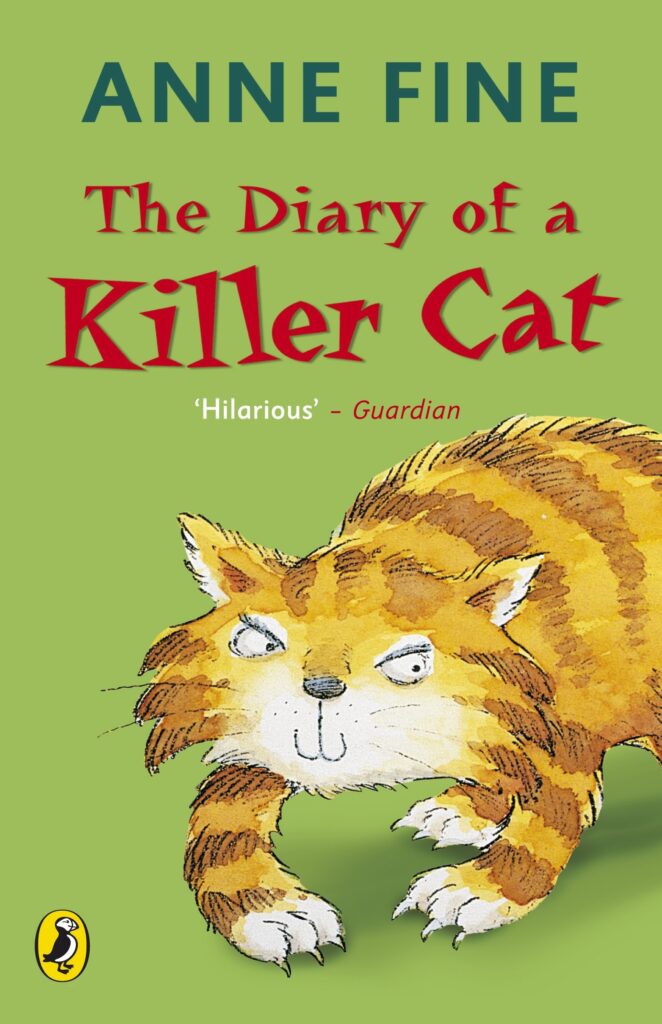
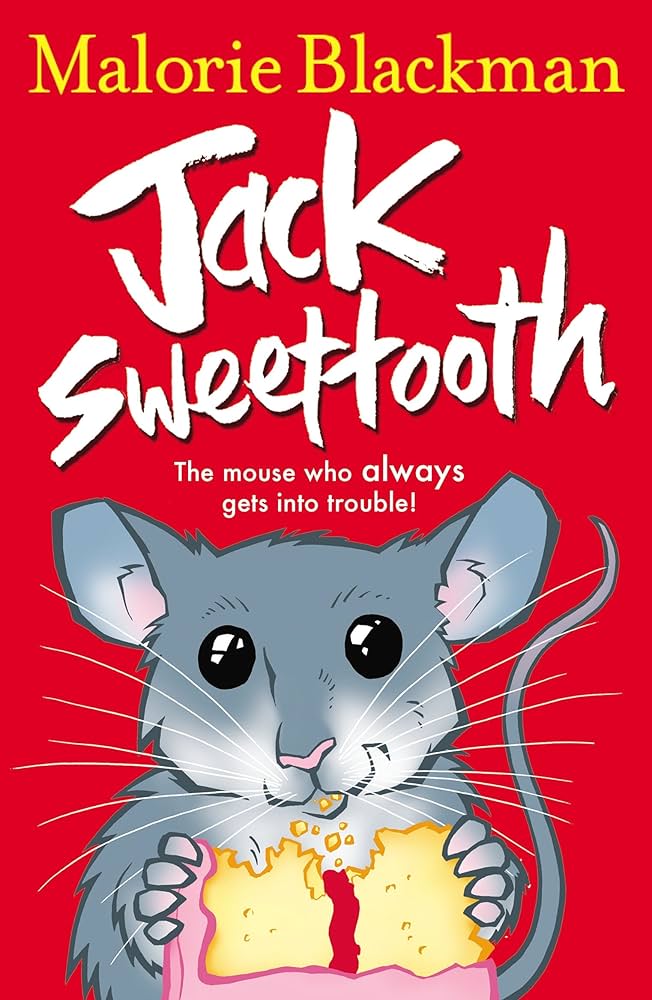
As readers this term: we will share and explore texts and develop our use of Expert Tips as part of our growing comprehension skills. We will retrieve information, make predictions and make inferences. We will continue to work on reading fluency.
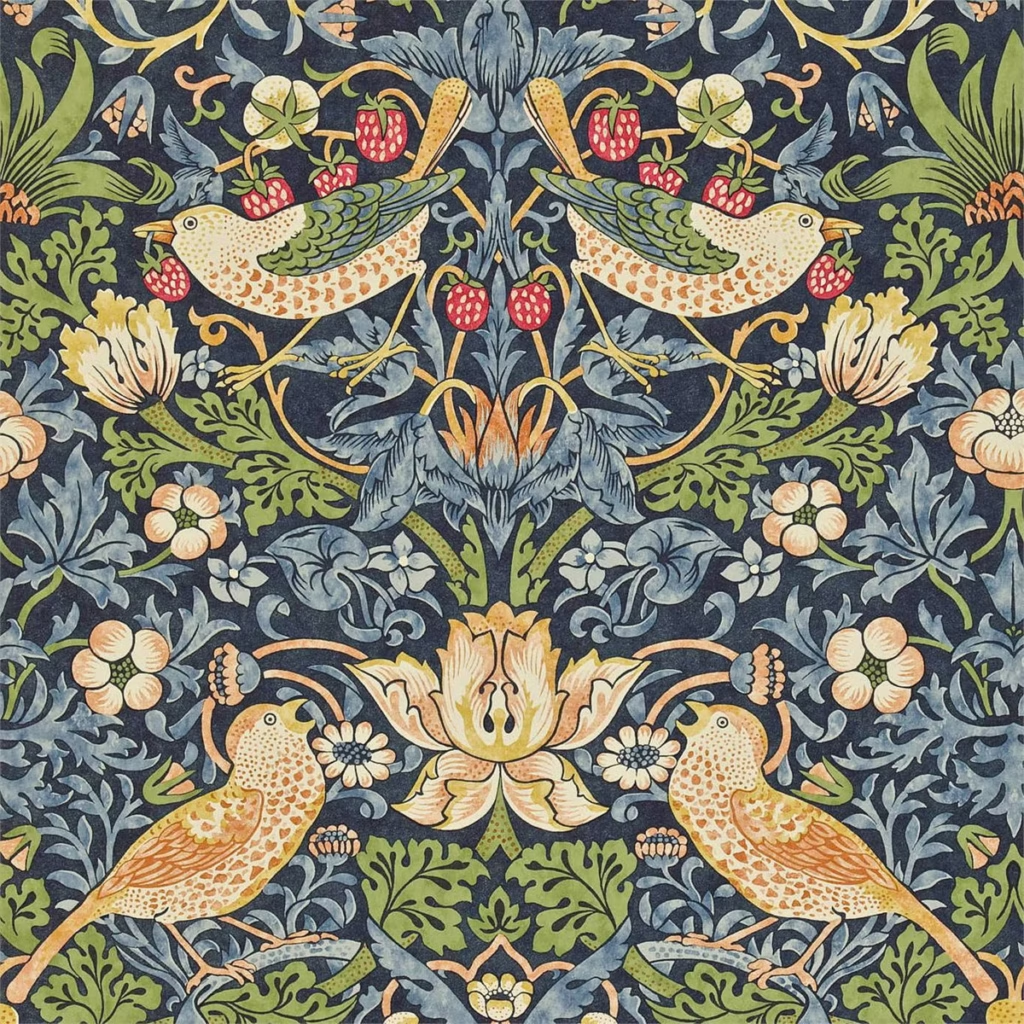
As Artists this term: we will be looking at the work of William Morris and his printing techniques and exploring his work. We will create our own prints which will be inspired by nature. We will also look at the work of Lynne Bailey.
As geographers this term: we will learning more about rivers and their journey from source to mouth, particularly the River Nile. We will look at the physical and human features of rivers and what wildlife live along the banks. We will be investigating the rivers impact on people who live near it, particularly in Cairo, Egypt.
As Athletes this term we will be learning: to play netwall games as a team and sportsmanship, to learn to swim more confidently and learn about water safety.
Autumn Term
As mathematicians this term we will be learning:
The value of each digit in a 3-digit number; how to use the formal written methods for addition and subtraction; and looking at how to apply this knowledge to problem solving.
As writers this term:
We will be writing to entertain and inform by developing descriptions with adjectives and adverbs. Using speech to develop characterisation. We will then begin using layout devices to organise non-fiction texts.
As readers this term:
We will continue to develop our reading fluency as we read a range of chapter books and further develop our ability to provide reasoned predictions and inferences. We will also develop our understanding of summaries to bring together the important pieces of information from a text.
As scientists this term:
We will be learning about plants and the functions of the different parts of the plant. We have set up several investigations in our room to help us understand about roots, stems, flowers (and seed dispersal) and leaves.
Next we will be learning all about animals, including humans. This will involve learning about our skeletons and muscles, as well as how humans stay healthy and survive. We will also be carrying out investigations and begin to draw conclusions from the data we collect.
As geographers this term:
We will focus on developing our map-reading skills with recognising some OS symbols; identifying physical and human features; recognising the stages of a river and focusing on the River Severn. We will then compare the River Severn to the River Danube in Europe.
As historians this term:
We will look at the role of archaeologists and how their work has helped us understand history. We will explore how settlements have evolved over time from the Stone Age through to the end of the Iron Age and what life was like for hunter-gatherers. We will look at a range of different sources of information and learn how to interpret it.
KEY TOPIC VOCABULARY FOR OUR CURRENT AND UPCOMING UNITS OF WORK.
Please help your children become familiar with these words:
Art: Tertiary colours, teal, violet, magenta, vermillion, amber, chartreuse, tones, tonal, more, less, effects, blending, wash, detail, apply, layers
Science: skeleton, bones, muscles, contract, relax, joints, nutrition, nutrients,
Geography: settlements, rivers, contours, climate, human and physical features, compasses, Severn, Danube
River vocabulary : source, meander, tributaries, estuary, delta, floodplain, waterfall, mouth, bank,.
Coast vocabulary: beach, bay, cove, cliff, bay, headland, cave, natural arch, stack, wave cut platform
Countries of Europe (linked to Danube): Germany, Austria, Slovakia, Hungary, Croatia, Serbia, Bulgaria, Romania, Moldova, and Ukraine
History: prehistoric, settlement, hill fort, hunter gather, nomadic, tool, flint, artefact, primary and secondary sources
P.E
In Year 3, we have P.E. on a Monday morning. Please make sure that your child’s P.E. kit and appropriate footwear are in school for these days. We also have swimming on Thursday morning, so please ensure your child has their swimming kit on this day.
DT
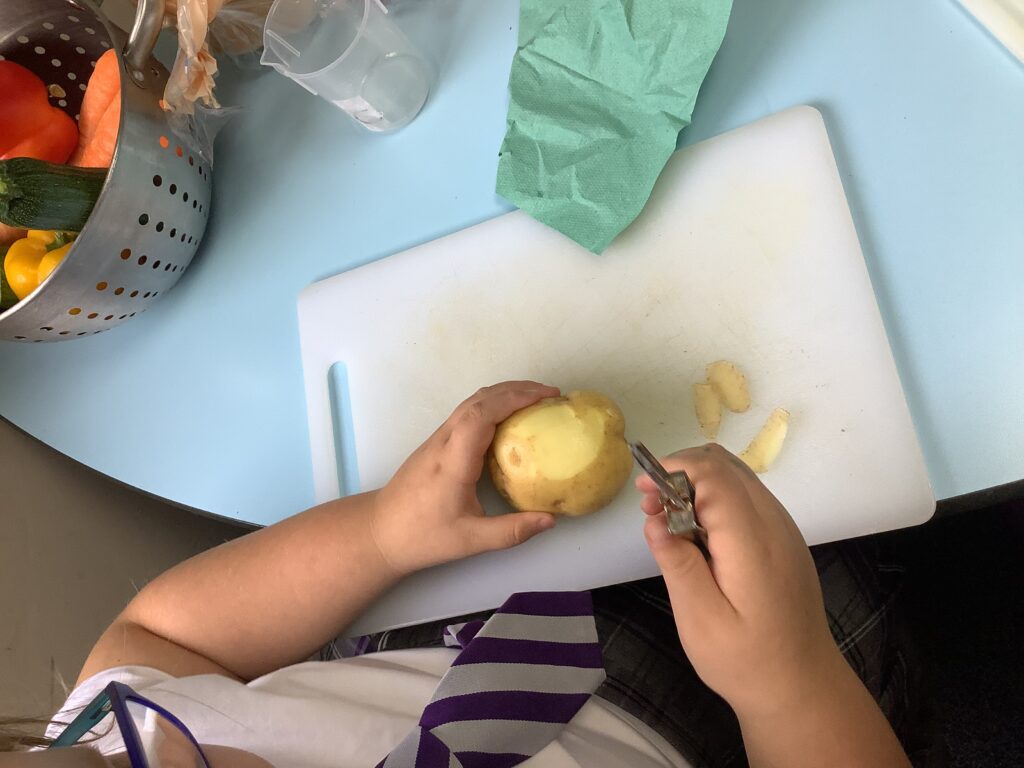
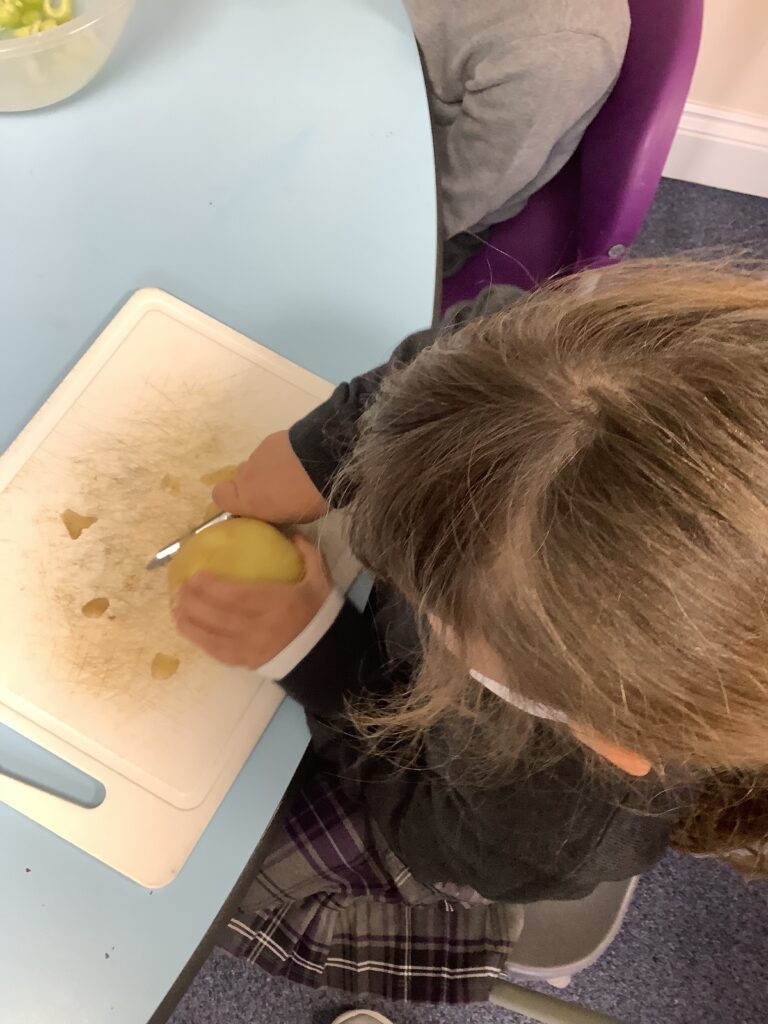
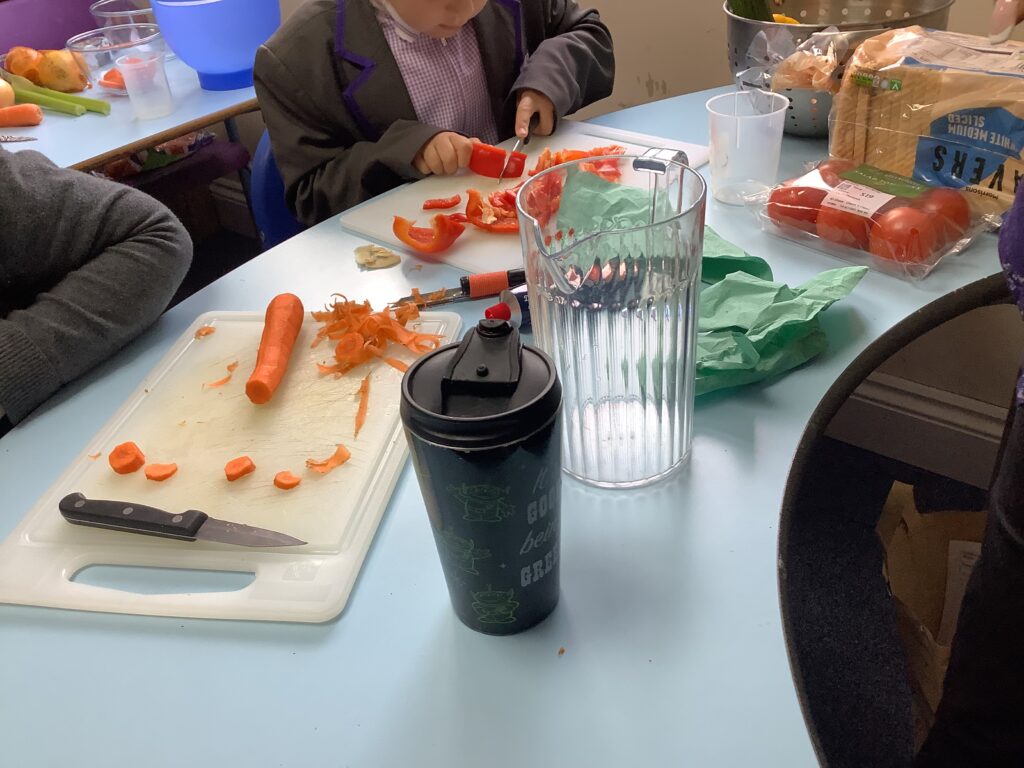
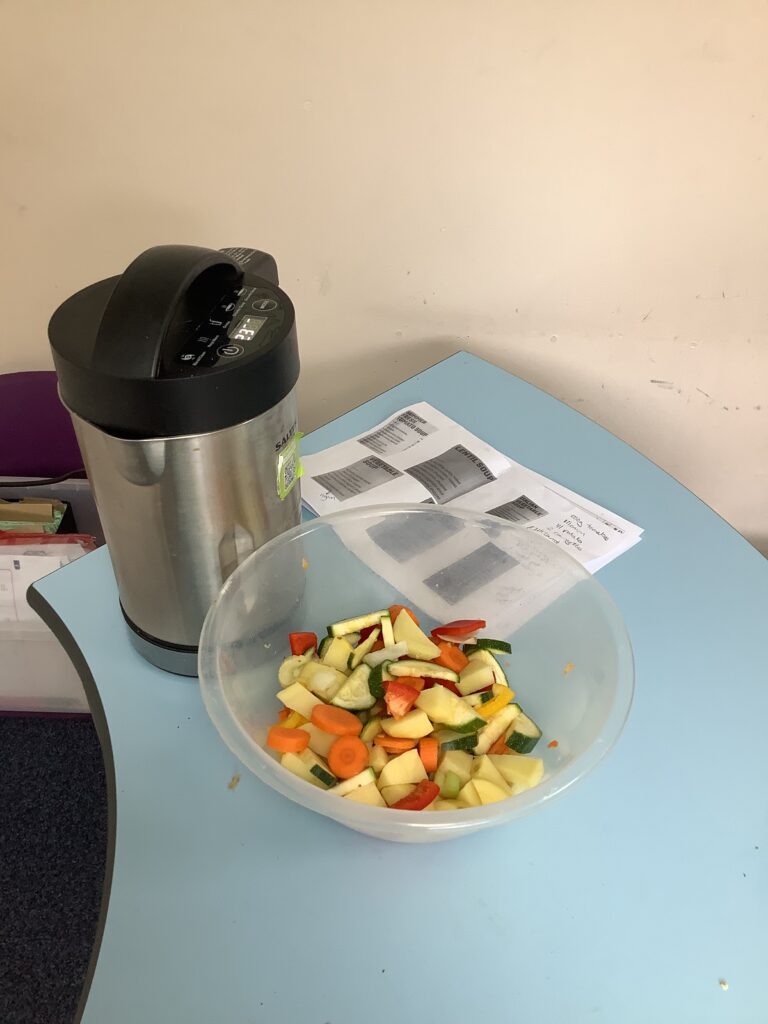
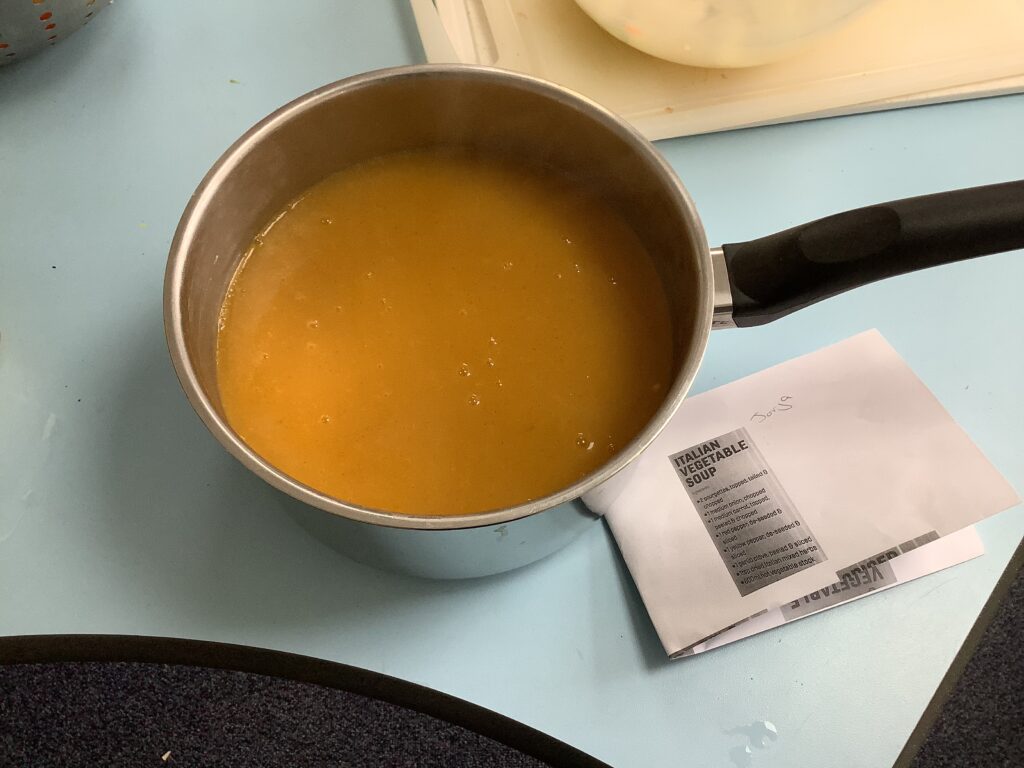
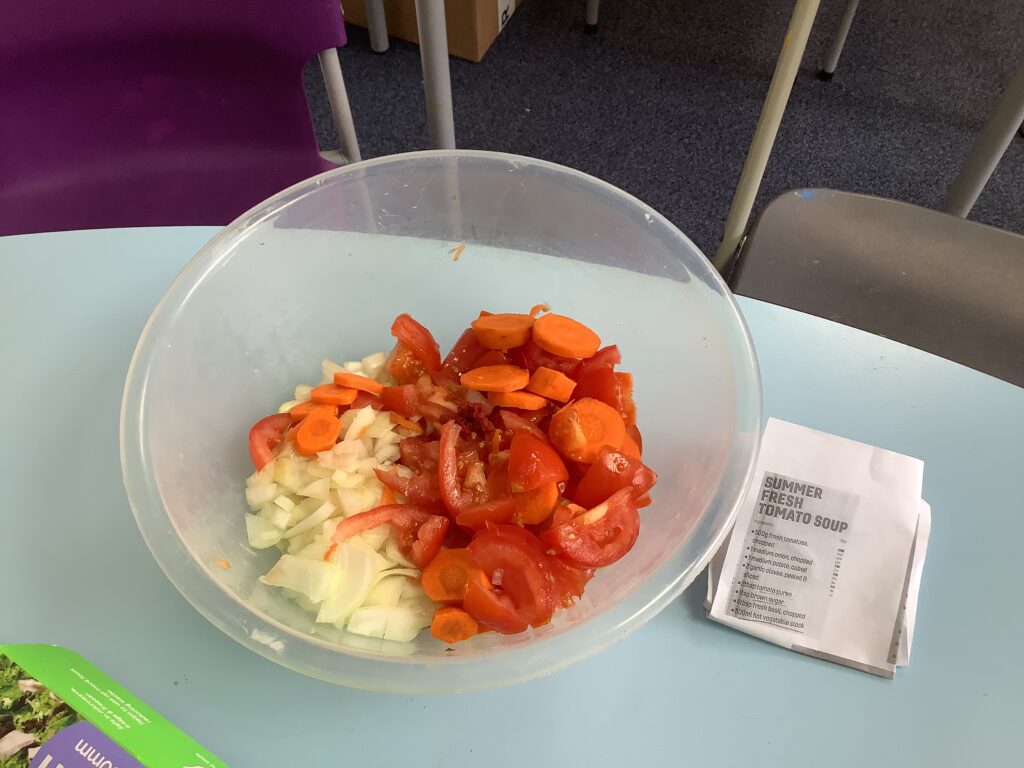
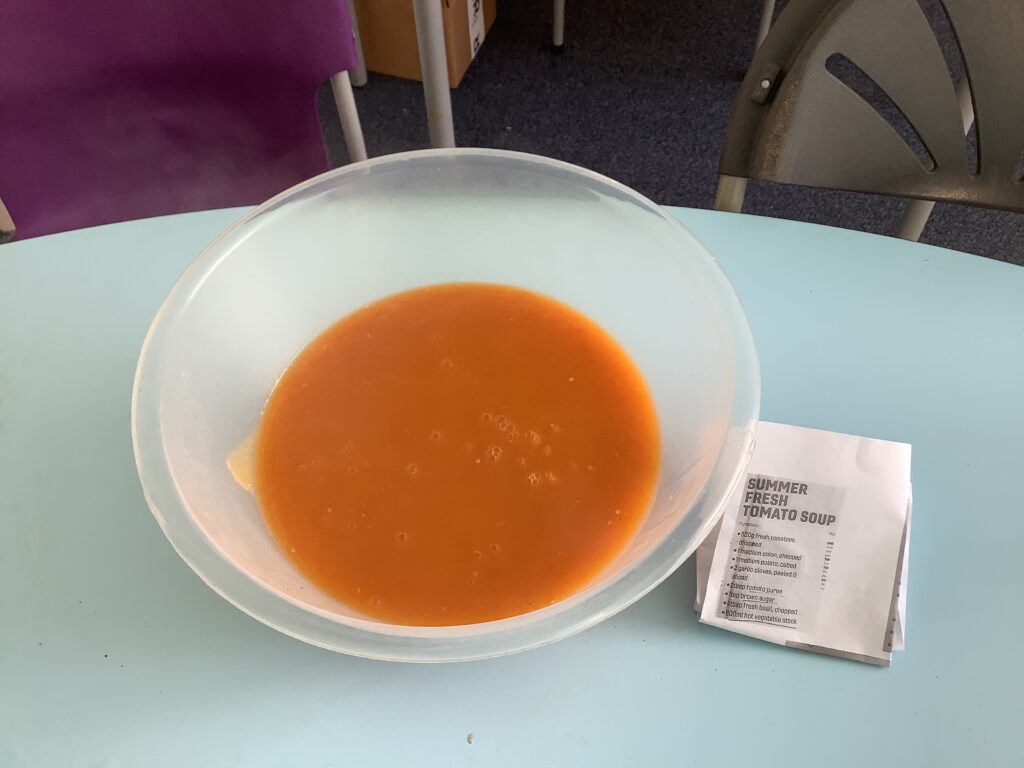
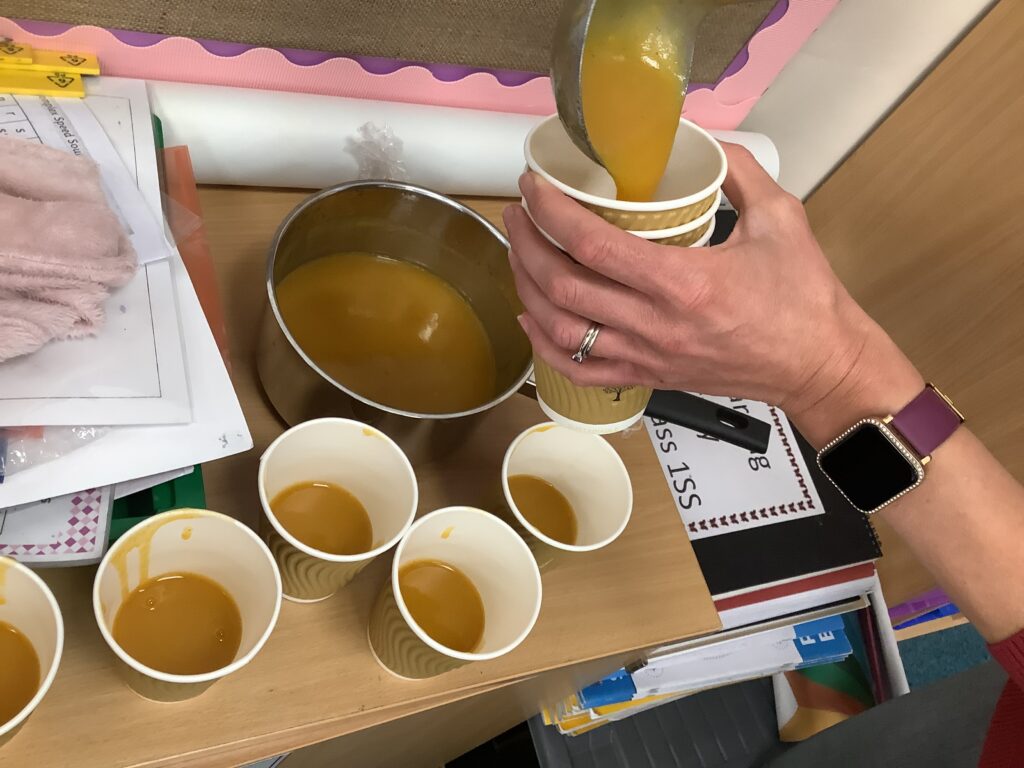
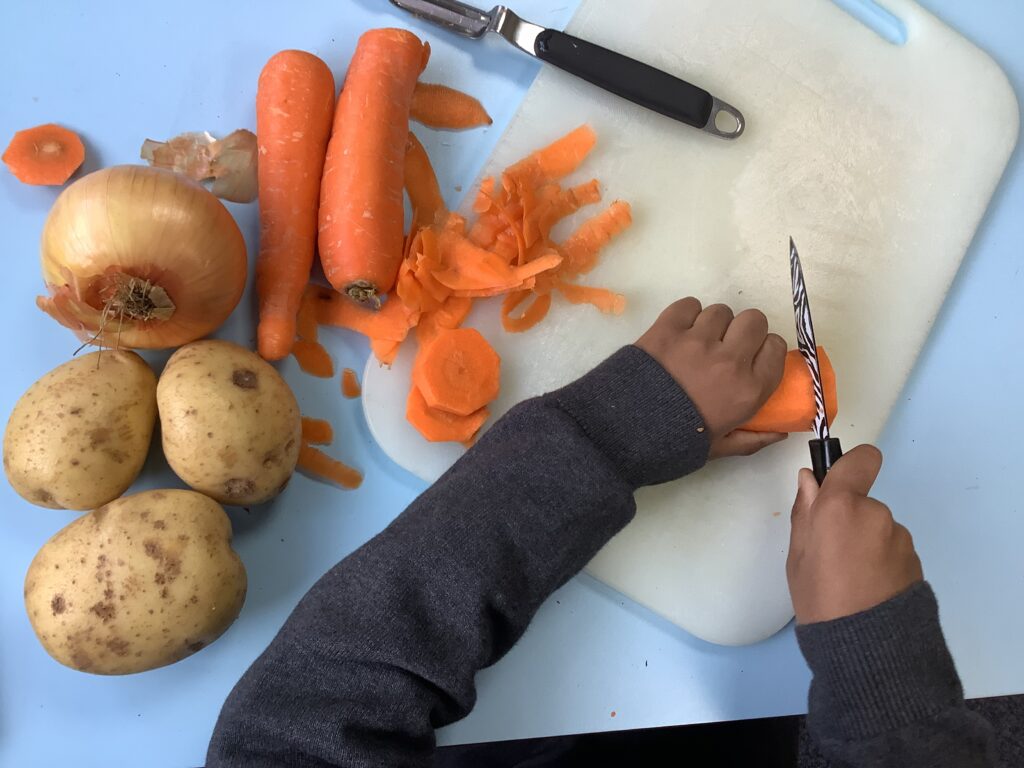
During our cooking and nutrition unit of DT, we prepared different vegetables and made some delicious soup. Have a look at some photos of what we did.
Useful Links
All the children in Year 3 have been given login details for TTRockstars. There is a weekly competition/tournament between the two classes to see who can score the most points. Help your children to learn their tables and increase their re-call of these crucial number facts and help your class to win housepoints!


Useful Information
This term, we have PE lessons on Tuesdays and Fridays.
Spellings will be given out every Friday and a spelling test will be taken the following Friday.